
A Reedbed Legend Returns
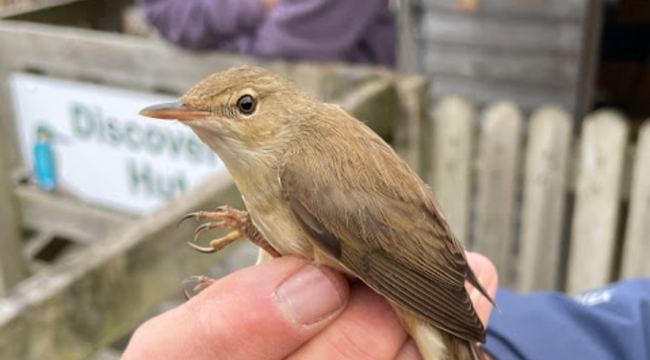
There’s been a real buzz lately at Seaton Wetlands, and for good reason. The Axe Estuary Ringing Group has had some wonderful surprises over recent days, but one bird in particular stole the show - the very first catch of the day, a reed warbler with an extraordinary story.
This unassuming little bird turned out to be something rather special. First ringed back on 17 June 2017 behind the Discovery Hut, the very same spot where it was caught again last Friday - this reed warbler has clearly taken a liking to the area. After its initial ringing, it was caught twice more in 2018 in the Tramway reedbed before seemingly vanishing from the records entirely… until now.
To put this rediscovery into perspective, reed warblers don’t usually enjoy such long lifespans. According to the British Trust for Ornithology, the average reed warbler lives just over two years. Although the longevity record is sitting just shy of 13 years. This bird was already aged as an adult when first ringed, meaning it’s now around ten years old - a remarkable achievement for such a small migrant. In bird terms, this individual is something of a veteran.
Reed warblers, Acrocephalus scirpaceus are medium-sized brown warblers and true specialists of reedbeds, flitting and chattering among the stems. They’re a familiar summer visitor to the UK, arriving after an epic journey back from wintering grounds in Africa. Despite their modest appearance, they play a starring role in one of nature’s most fascinating dramas: they are one of the most common host species for the cuckoo, another migratory bird that has recently returned to the UK.
Moments like this highlight just how valuable bird ringing is, allowing us to glimpse the hidden lives and journeys of these incredible creatures across years and continents. They also remind us why places like Seaton Wetlands are so special, providing safe havens where wildlife can thrive and, occasionally, surprise us.
So next time you’re out for a walk, listen carefully among the reeds. With a bit of luck, you might just spot or hear one of these resilient reed dwellers yourself.