
The Wetlands Are Alive With Warbler Song
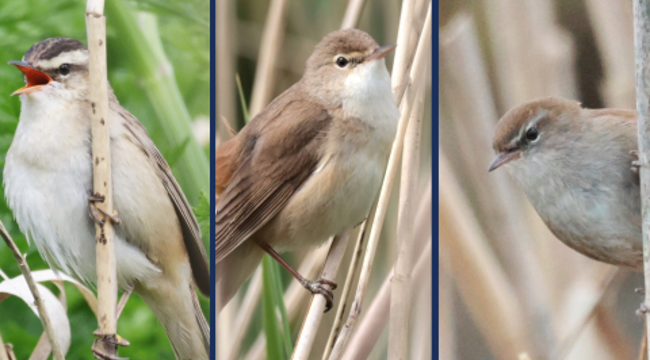
Some of our most enchanting summer visitors - the warblers have returned, filling the reedbeds with their distinctive, musical calls. During the summer months, three species of warbler make Seaton Wetlands their home. With a little patience (and perhaps a touch of luck), you might even spot one flitting through the reeds.
Who’s Singing?
Sedge Warbler, Acrocephalus schoenobaenus
The lively sedge warbler is easy to identify with its bold pale supercilium and streaky brown upperparts. Its song is similar to that of the reed warbler but includes scratchier, more varied notes. These birds arrive in April to breed in the UK, favouring wetlands, reedbeds, and marshy edges; making Seaton Wetlands the perfect summer retreat.
Reed Warbler, Acrocephalus scirpaceus
Sleeker and more uniform in colour, reed warblers can be trickier to identify by sight, but their rhythmic, repetitive song gives them away instantly. They’re industrious breeders too, often raising two broods between late spring and midsummer. Reed warblers are also a well-known host species for cuckoos, who slyly lay their eggs in the reed warbler’s nest.
Cetti’s Warbler, Cettia cetti
If you hear a sudden, explosive burst of song from deep within the reedbeds, it’s likely a Cetti’s warbler. Despite their small, brown, and rather secretive appearance, their voice is unmistakably loud and confident. Since first being recorded breeding in the UK in the 1970s, their numbers have steadily increased - much to the delight of wetland wanderers.
Have You Heard the Trio?
Next time you’re exploring our reedbeds and boardwalks, pause for a moment and listen closely. Have you heard all three of our summer warblers singing across the reserve? Each one brings its own character and charm to Seaton Wetlands, creating a vibrant soundscape that marks the arrival of summer.