
A rare hoverfly spotted in Devon: a possible new arrival to Britain
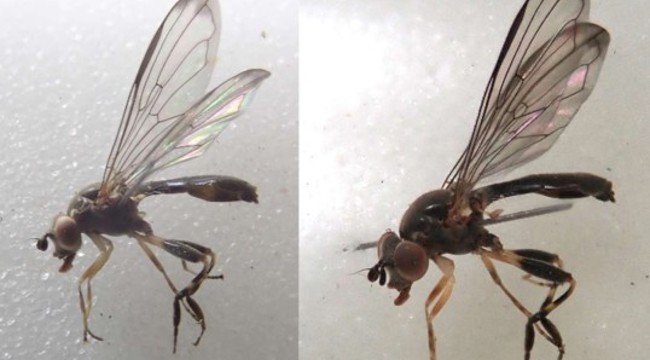
On 12 April 2025, a small hoverfly was collected from blackthorn flowers at the edge of wet woodland. At first glance, it didn’t quite match any of the four hoverfly species from the genus Sphegina known to occur in the UK. What stood out most were its noticeably darkened wing tips, an unusual feature that immediately raised questions.
After photographs were shared with several hoverfly experts, the insect was identified as Sphegina limbipennis, a species previously known mainly from southern Europe, including Spain, Portugal, and southern France. More recently, it has also been found at a handful of sites in north-west France, suggesting the species may be expanding its range.
Why this matters
If confirmed, this record would be the first for Sphegina limbipennis in Britain. South-west England shares a similar climate and landscape to north-west France, so its arrival here could be a natural step rather than a sudden surprise.
Adding to the intrigue, a photograph taken in April 2024 at Slapton, in South Devon and close to the coast, shows a similar hoverfly with dark wing tips. While that individual couldn’t be identified with certainty at the time, it may also have been S. limbipennis. If so, this could indicate the species has only recently arrived rather than having been overlooked for decades.
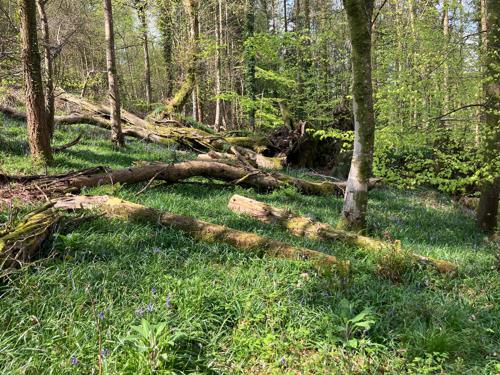
Holyford Woods, East Devon - EDDC Nature Reserve
A hoverfly that likes wet woods
Very little is known about the biology of Sphegina limbipennis, but its close relatives favour damp, shady woodland, especially areas with streams, boggy ground, or decaying wood. Holyford Woods fits this profile well: it is an ancient woodland with a central stream, wet areas, and a long history of continuous tree cover.
Hoverflies in the genus Sphegina can be surprisingly hard to find, even when present in good numbers. A return visit to the site just days later failed to locate another individual, which is not unusual for these elusive insects.
What happens next?
The specimen has been deposited in the Natural History Museum in London, ensuring it is preserved for future study. Further surveys of Holyford Woods and similar wet woodland sites in Devon and beyond will be important to determine whether this hoverfly is now established in Britain.
For now, the discovery highlights how much there is still to learn about our insect fauna, and how careful observation can reveal new and unexpected stories, even in well-studied landscapes.
Credit: Richard Lane and the Devon Fly Group